
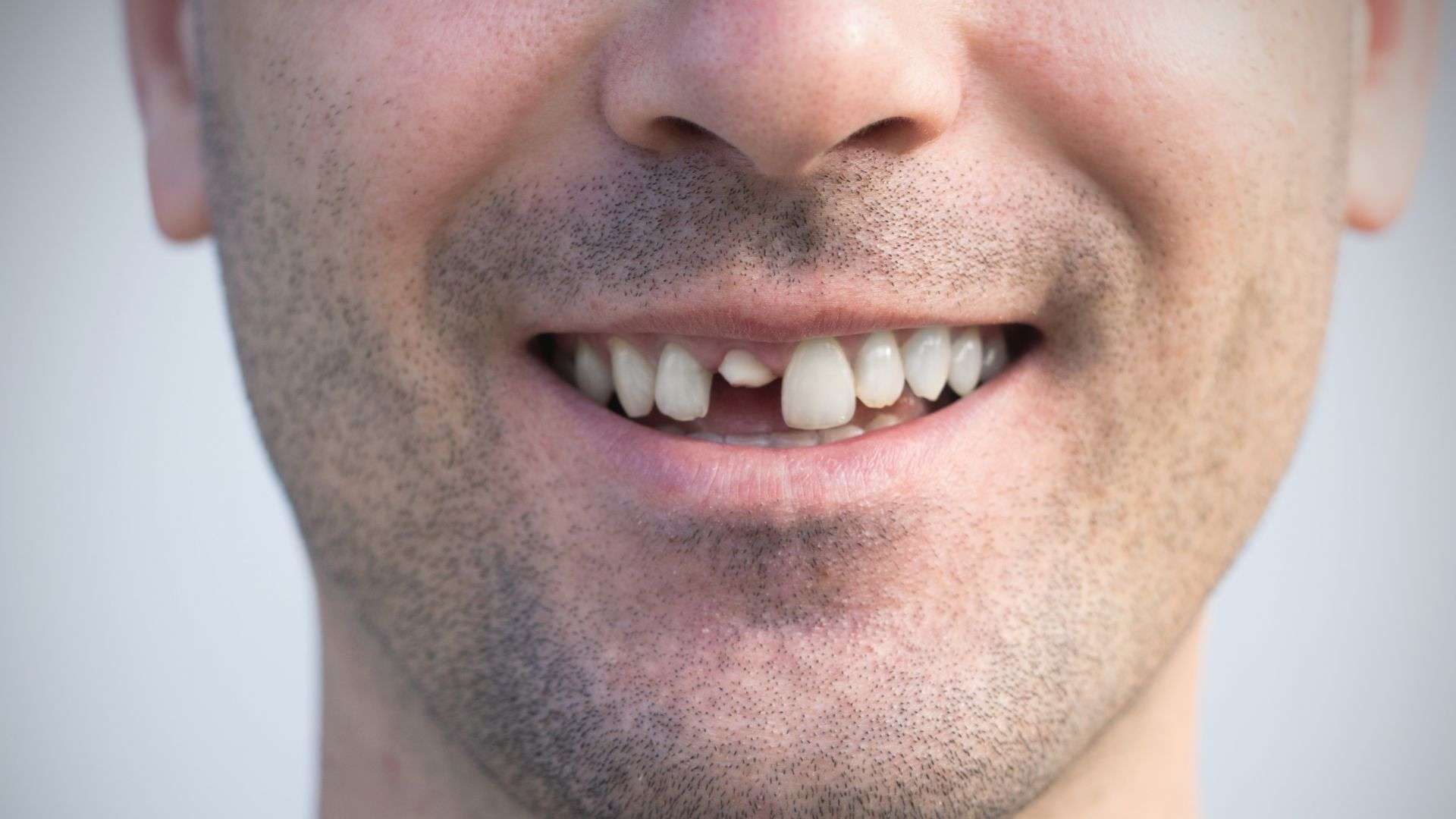
Losing a tooth rarely feels like a small thing, and it shouldn’t. The effects go beyond the obvious gap in your smile and reach into how you eat, how you speak, and what happens structurally to the surrounding teeth and bone over time.
What Tooth Loss Actually Does to Your Mouth
 The NHS notes that missing teeth can cause difficulty eating or speaking, as well as affecting confidence. But the structural consequences are less widely understood and often more significant in the long run.
When a tooth root is removed, the bone that supported it no longer receives the mechanical stimulation it needs to stay dense. Bone resorption begins almost immediately. It’s slow, but it’s continuous. Over years, the jawbone in the area of the missing tooth becomes shallower and narrower. This affects the shape of the face in the longer term and, more immediately, it can complicate replacement options — particularly implants, which require adequate bone volume.
The teeth on either side of a gap also change. Without the contact provided by the missing tooth, they gradually tilt toward the space. The tooth opposing the gap (above or below) drifts because there’s nothing to bite against. These shifts alter the bite relationship across the whole mouth, not just at the site of the missing tooth.
In our experience, patients who come in for a consultation five or more years after an extraction often face more complex treatment than patients who address the gap promptly. The options are usually still available. But the conditions have changed, and that affects what’s involved.
Your Options for Rebuilding After Tooth Loss
Restorative dentistry offers several routes for replacing missing teeth, and the right one depends on how many teeth are missing, the condition of the remaining teeth, the bone volume at the site, your general health, and your personal preferences. There’s no single answer that fits everyone.
The three main approaches are dental implants, bridges, and dentures. Each works differently, has different maintenance requirements, and produces a different experience for the patient.
Dental Implants: The Closest to a Natural Tooth
 A dental implant is a titanium post that’s placed directly into the jawbone. Over a period of somewhere between three and six months, the bone fuses to the titanium surface. Once integration is complete, a crown is fitted on top. The result is a fixed, stable replacement that functions like a natural tooth.
The critical advantage of an implant over other options is what it does for the bone. Because the post is in the jaw, it provides the mechanical stimulation that prevents resorption. This is the one replacement option that actively protects the bone structure, rather than simply filling the visible gap.
Implants aren’t suitable for everyone. Adequate bone volume is needed, which is why early replacement matters. Smokers face higher failure risks, and certain medical conditions or medications require careful assessment before proceeding. But for patients who are suitable candidates, the long-term outcome tends to be the most stable of the available options.
| Replacement Option | Suitable For | Approximate Timeframe | Bone Preservation |
|---|---|---|---|
| Dental implant | Single or multiple teeth, sufficient bone present | 4–9 months from placement to final crown | Yes |
| Dental bridge | Single or few missing teeth, healthy adjacent teeth | 2–3 appointments over 3–4 weeks | No |
| Partial denture | Multiple missing teeth, or not suitable for implants | Several fittings over 4–6 weeks | No |
| Full denture | Complete tooth loss in upper or lower arch | Several fittings over 4–8 weeks | No |
| Implant-retained denture | Full arch replacement with implant stability | 6–12 months including healing | Partial |
Bridges: A Fixed Alternative Without Implant Surgery
 A dental bridge spans the gap left by a missing tooth, anchored to the healthy teeth on either side. It’s a fixed restoration: it doesn’t come out, and it functions much like natural teeth for eating and speaking. The treatment is quicker than implants and doesn’t involve surgery, which makes it a preferable option for some patients.
The main consideration with a bridge is that the supporting teeth need to be prepared to accept the bridge, which involves reshaping them. That’s a permanent change. And a bridge doesn’t prevent the bone loss that occurs under the missing tooth space, because there’s no root in the jaw. Over many years, this gradual bone loss can cause the ridge to change shape under the bridge.
That said, a well-made bridge in the right patient can last well over a decade with proper care. It’s a proven, reliable option.
Dentures: Removable but Effective
 Dentures are the traditional solution for missing teeth, and they remain a practical option for many patients, particularly those with multiple missing teeth or for whom implants aren’t suitable. The NHS dentures page outlines the main types: complete dentures replacing all teeth, and partial dentures replacing one or more.
Some patients find adapting to dentures straightforward. Others find it takes longer, particularly with lower dentures, which have less surface area to grip on to. In our experience, realistic expectations and patience in the early weeks make a significant difference to how well patients adapt.
And modern partial dentures, particularly those with metal frameworks, are more comfortable and stable than older designs. They’re not the only option, but for patients who aren’t candidates for implants or bridges, they provide a functional solution.
Combining Approaches for Multiple Missing Teeth
When several teeth are missing, the solution is often a combination of approaches rather than one type of restoration across the board. A patient missing two back teeth and one front tooth might benefit from an implant in one position and a bridge in another, depending on the condition of the surrounding teeth and the bone available.
Honest clinical planning means being clear about what will work in the long term, not just what’s simplest to provide. You’ll find some information online suggesting one option is always superior to another. In practice, it depends entirely on the individual situation.
If you’re a Woking patient living with one or more missing teeth, we’d encourage you not to leave the decision too long. The sooner the bone and bite situation is assessed, the more options tend to be available. Contact Coniston Dental Practice in West Byfleet and call us on 01932 343675 to arrange a consultation.


