

Most people have had a dental check-up, but a dental hygienist appointment is a different kind of visit entirely. It is more hands-on, more focused on the gum line, and in many ways more important for your long-term oral health than the standard examination.
If you have been referred to see a hygienist for the first time, or you have simply decided to book one independently, it is reasonable to want to know what is coming. The appointment is not uncomfortable for most people, but preparation helps.
What the Hygienist Is Actually There to Do
A dental hygienist is a registered clinical professional trained specifically in the prevention and management of gum disease, plaque control, and the removal of calculus, the hardened mineral deposit that forms when plaque is left undisturbed on the tooth surface. According to NHS Health Careers, hygienists work as part of the wider dental team and can provide a range of preventive treatments independently, working from a prescription issued by a dentist or, in some settings, directly from a patient referral.
The distinction from a dentist matters. Your dentist examines, diagnoses, and restores. Your hygienist treats and teaches, working on the soft tissue environment around your teeth and helping you maintain it between appointments. These are complementary roles, not interchangeable ones, and many patients benefit considerably from seeing both on separate schedules.
What Happens at the First Visit
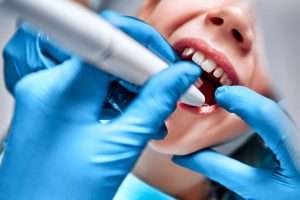 At your first hygienist appointment, expect the following sequence. It is largely consistent across practices, though the time and detail will vary depending on your individual clinical presentation and how much build-up is present.
- Health and medication review: The hygienist will ask about your general health, any medications you are taking, and whether you have conditions such as diabetes or heart disease that affect gum health. Certain medications, including blood thinners, calcium channel blockers, and some anticonvulsants, can directly affect gum tissue and alter what is found at assessment.
- Gum assessment: Using a small probe, they will measure the depth of the pockets around each tooth. Healthy gums typically show depths of 1 to 3mm; readings above 4mm suggest active gum disease and may require a more intensive course of treatment than a routine clean.
- Plaque and bleeding scores: They will record where plaque is present and note which sites bleed on probing. Bleeding is a reliable early indicator of inflammation, and its location helps identify where home cleaning is missing the mark.
- Scaling: Using hand instruments and often an ultrasonic scaler, they will remove tartar from above and below the gum line. The ultrasonic scaler uses vibration and water irrigation to break down deposits efficiently without damaging the tooth surface.
- Polishing: A rotary cup with prophylaxis paste removes surface staining and leaves a smooth finish that is harder for plaque to re-adhere to between appointments.
- Oral hygiene instruction: This is not optional or supplementary. Personalised brushing and interdental cleaning advice based on what they found is core to the appointment and central to the long-term outcome.
Not always a straightforward clean. If there is significant calculus build-up or signs of deeper gum disease, the hygienist may recommend a more intensive course of treatment, sometimes referred to as root surface debridement, across multiple visits carried out under local anaesthetic.
Some patients find this straightforward. Others need more time.
For people with healthy gums and minimal build-up, a hygienist appointment is rarely more than mildly uncomfortable. For those with inflamed gums or deep pocketing, the area around the gum line will be more sensitive, and some pressure and occasional sharp sensation is to be expected. Topical anaesthetic gel can be applied to reduce discomfort, and local anaesthetic is available if needed for deeper work. The hygienist will always work at a pace the patient can manage, and will pause if asked.
Sensitivity after the appointment, particularly to temperature, is normal and usually settles within a day or two. Persistent pain following a hygienist visit is worth reporting. The hygienist can advise on whether what you are experiencing is typical post-treatment sensitivity or something that warrants a follow-up appointment.
What to Expect: Comfort and Duration
| Appointment Type | Typical Duration | What Is Covered |
|---|---|---|
| First hygienist appointment (mild build-up) | 45 to 60 minutes | Assessment, scale and polish, oral hygiene instruction |
| First hygienist appointment (moderate to heavy build-up) | 60 to 90 minutes | Full assessment, extended scaling, oral hygiene instruction |
| Maintenance hygienist appointment | 30 to 45 minutes | Review, targeted scaling, polish |
| Root surface debridement (per quadrant) | 45 to 60 minutes | Subgingival cleaning, detailed review |
What to Do Beforehand
Brush and floss as normal before you arrive. Do not avoid brushing in the hope that it will make the assessment more representative of your routine. Your hygienist will take a plaque score regardless, and clean teeth make the appointment easier for both parties.
Worth knowing: eating a large meal immediately before can make the probing slightly more uncomfortable, though it is not a clinical reason to fast. If you take any regular medications, have a list to hand. If you are anxious, say so at the start. The hygienist can adjust their approach with shorter sessions, more frequent breaks, or a talk-through of each stage before it happens. Many patients who present as apprehensive at the outset find the reality considerably more straightforward than their expectation had suggested. Communicating that anxiety at the start of the appointment gives the hygienist the opportunity to adjust their approach accordingly, and most find this makes the experience significantly more manageable.
The Oral Hygiene Instruction Component
Patients sometimes underestimate the importance of the oral hygiene instruction element of a hygienist appointment. This is not a token five minutes at the end of the clean. It is a structured review of technique, tools, and products based specifically on what the hygienist found during the assessment, tailored to the patient’s individual mouth.
What we tend to see in clinic is that patients are brushing adequately across the biting surfaces and outer faces of the teeth but missing the gum margin and the areas between teeth almost entirely. Interdental cleaning with brushes, floss, or water flossers is rarely done correctly without demonstration, and the technique for cleaning at and below the gum margin with a toothbrush is not intuitive. The instruction component, delivered well and acted on consistently, is arguably more valuable than the scaling in the long term, because it is the daily routine that determines how quickly deposits return between professional visits.
What Happens Afterwards
The NHS guidance on dental check-ups notes that the interval between appointments should be based on individual clinical need, not a fixed calendar. Your hygienist will recommend a recall interval at the end of the visit, commonly three, six, or twelve months depending on what was found.
And here is what that means in practice. The first appointment establishes a baseline. Subsequent visits track changes, consolidate gum health improvements, and keep calculus levels from recovering. One appointment, no matter how thorough, will not resolve established gum disease. But it is always the right starting point.
You will find advice online suggesting that a twice-yearly clean is sufficient for everyone. In our experience, that is not always accurate. The right frequency depends on how quickly plaque mineralises for a given patient, how effectively they clean at home, and whether any gum disease is present or has previously been treated. In our experience, patients who attend consistently and follow the home care advice given at each visit maintain substantially better gum health over the long term than those who attend sporadically.
Booking at Coniston Dental Practice
We offer hygienist appointments at Coniston Dental Practice in West Byfleet for both existing patients and those coming to us from elsewhere in Surrey. Hygienist appointments are private rather than NHS-funded, and pricing is available on request. You are welcome to call us on 01932 343675 to ask any questions before you book, or to arrange an appointment at a time that suits you.


